



Collaboration

Building Skills Through Real-World Teamwork Tasks.

Collaboration Learning Activities help learners practise working with others, sharing ideas, and contributing to common goals in authentic workplace situations. These task-based activities support meaningful skill development by helping learners communicate respectfully, listen actively, solve problems together, and reflect on group participation. Through self-directed learning and reflection, learners can build confidence and apply collaboration skills more effectively in everyday life, education, and work.

Collaboration Learning Activities

Skills for Success defines Collaboration as the ability to contribute and support others to achieve a common goal.

Discover the language in Collaboration

Digital requires finding, interpreting and conveying information and ideas via digital technology. It involves receptive, expressive, reading and writing, often in combination; for example:

  • Interpreting and using menus to navigate digital content and accomplish digital tasks, such as printing or opening a file.
  • Locating relevant content using search functions and keywords; skimming and scanning search results for relevance.
  • Following instructions to complete digital tasks.
  • Giving explanations for digital tasks, using technical jargon where needed, and adapting language to suit the reader/watcher’s digital competence.
  • Identifying sources of digital information and evaluating them for credibility and bias; citing digital sources.
  • Interpreting digital messages to recognize fraud, including phishing and identity theft.
  • Labelling files and folders to keep organized; identifying file extensions for file types.
  • Composing texts that are appropriate to the digital platform.
  • Completing digital forms.
  • Issuing text/video commands or recording video messages.
  • Participating in live technology-mediated interactions.
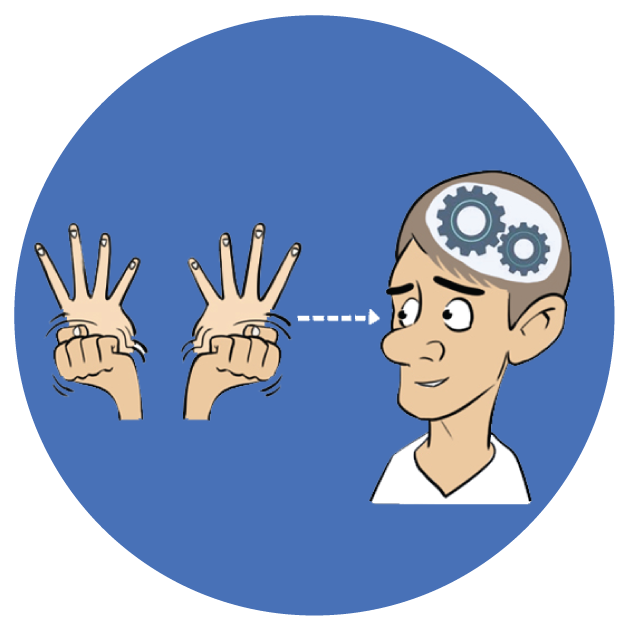
Explore work-related examples at each CLB stage

The Canadian Language Benchmarks (CLB) describe communicative ability in English as a Second Language (ESL). The CLB organize 12 benchmarks into three stages of ability: Stage I (Basic), Stage II (Intermediate) and Stage III (Advanced).

Learners may already possess Collaboration skills but lack the English and the sign language to demonstrate them. For this reason, there is no direct correspondence between Collaboration and CLB levels.

The examples below show the language involved in demonstrating Collaboration.

Demonstrating Collaboration at CLB Stage I

Watch and read and understand a co-worker’s update on a shared task; comment or pose questions to indicate support and understanding.
Watch and read and understand brief instructions to accomplish a simple shared task; ask questions or request repetition or rephrasing to understand responsibilities.
Express a preference to a co-worker about a routine policy, such as scheduling; ask for their view.
Communicate appreciation for a co-worker’s efforts. (Good work. I like what you’ve done. That’s a great idea.)
Read a short shift-change message from a co-worker about tasks completed; write a short end-of shift update.

Demonstrating Collaboration at CLB Stage II

Interact in a team; follow straightforward instructions, seek clarification about responsibilities, invite members of the group to share their views and help accomplish the task.
Give a short summary of the main points of a goal-setting meeting to a co-worker who was absent.
In a staff meeting, convey appreciation for a co-worker’s idea before expressing your own; respond positively to questions and requests for clarification.
Canvass co-workers for their views on a team-building event; summarize input to make a recommendation to management.
Read a co-worker’s suggestion to improve a work process; thank the co-worker and identify how the suggestion will be implemented.
Write a message to co-workers to suggest a sympathy gesture for a colleague who is ill and ask for input.
Write a polite message to an employee asking them to complete a task; convey awareness of their workload and flexibility as to when and how the task is completed.

Demonstrating Collaboration at CLB Stage III

Discuss a shared task in a group meeting; summarize points reached to help focus the discussion and propose next steps to move it forward.
Facilitate a team brainstorming session to explore solutions to a workplace problem.
Show interest and sensitivity to different perspectives in a group working on a shared task; acknowledge contributions, express concerns, convey empathy, and handle disagreements tactfully.
Co-ordinate a group that is working on a project; formulate and revise instructions, provide clarification, and evaluate ideas from team members.
Review a draft of a collaboratively written report; offer suggestions to improve structure and flow.
Understand implied attitudes, bias, and opinions expressed in written messages from co-workers about a shared task; respond tactfully by clarifying misconceptions, acknowledging differences in perspectives, and focusing on the shared goal.