


Benchmarking

Benchmarking

Know Exactly What Language Level Is Needed

Benchmarking helps organizations connect real communication tasks to CLB or NCLC levels. It gives you a clear, evidence-based way to define language expectations for roles, programs, pathways, and workplace contexts.
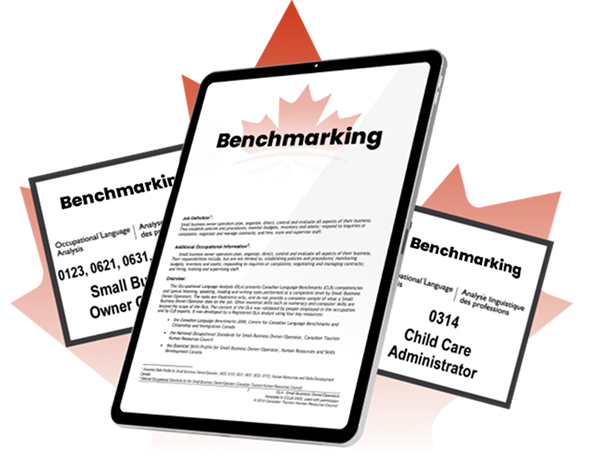

About Benchmarking

What Is Benchmarking?

Turn Language Expectations into Clear Benchmarks

Benchmarking answers a simple but important question: What language level is needed to succeed in this context?

CCLB reviews the communication tasks involved in a role, program, pathway, or assessment context and maps those demands to the appropriate CLB or NCLC levels. This helps organizations set requirements that are consistent, transparent, and easier to justify.

BENCHMARKING AREAS

What Can Be Benchmarked?

OLA-ALP can benchmark job roles, workplace communication tasks, training programs, assessment activities, and professional pathways against clear CLB/NCLC language expectations.

Occupations

Identify the language levels needed for specific jobs or professional roles.

Programs

Define entry, placement, progression, or exit language expectations.

Workplace Tasks

Understand the language demands of daily workplace communication.

Assessment Tasks

Check whether assessment activities align with the intended CLB/NCLC levels.

Professional Pathways

Support clearer requirements for licensing, bridging, or employment readiness.

BENCHMARKING VALUE

Why It Matters

Clear Benchmarks Create Better Decisions Without clear benchmarks, language expectations can be vague, inconsistent, or difficult to explain. Benchmarking creates a stronger foundation for program design, assessment, training, policy, and stakeholder communication.

Clarifies required language levels

Supports fairer decisions

Reduces confusion for learners or candidates

Helps programs align training and outcomes

Strengthens assessment and curriculum planning

Provides a clear rationale for language requirements

Process

Our Benchmarking Process

A clear step-by-step process for identifying communication demands, mapping them to CLB/NCLC levels, and turning the findings into practical recommendations.

Define the Context

We clarify what needs to be benchmarked and how the results will be used.

Gather Task Evidence

We review documents, tasks, program materials, workplace information, or stakeholder input.

Analyze Communication Demands

We identify what people need to understand, say, read, or write.

Map to CLB/NCLC

We align the demands with appropriate benchmark levels.

Provide Clear Findings

You receive practical recommendations that support decision-making and implementation.

IDEAL USES

Benchmarking Is Ideal For

Use benchmarking to define clear language expectations for programs, pathways, assessments, workplace training, curriculum planning, and policy decisions.

Program entry or exit requirements

Workplace readiness programs

Bridging programs

Professional licensing pathways

Curriculum planning

Assessment development

Employer training programs

Policy or funding decisions

Start Your Project

Need to Benchmark a Role, Program, or Pathway?

CCLB can help you define language expectations with clarity, evidence, and national standards.